Across US higher education, capital planning is becoming an increasingly complex balancing act. Universities must maintain aging infrastructure, respond to changing student expectations and invest in modern learning environments, often within tighter financial constraints.
For campus leadership, the challenge is no longer simply identifying which projects are needed. It is determining which investments deliver the greatest long-term value.
The growing cost of deferred investment
The scale of the challenge is substantial.
Gordian’s 2026 State of Facilities in Higher Education report found that deferred capital renewal needs across North American campuses have reached $156 per gross square foot, an increase of approximately 8% over the previous year.
The report, drawing on data covering 43,000 buildings and 1.1 billion gross square feet, also found that institutions are investing just 73.5% of the capital funding required to prevent their renewal backlogs from growing.
This persistent funding gap has important implications for campus development.
As building systems reach the end of their useful lives, universities face increasing pressure to address aging mechanical infrastructure, building envelopes, electrical systems and other critical assets.
Deferring these investments may protect short-term budgets, but can increase long-term exposure to operational disruption, emergency repairs and escalating replacement costs.
From individual projects to portfolio-wide planning
Traditionally, university capital programs have often been shaped by departmental needs, available funding and individual project priorities.
Increasingly, however, effective capital planning requires a broader portfolio perspective.
A new academic building, laboratory refurbishment or student accommodation project should not be evaluated in isolation. Each investment needs to be considered alongside the condition of existing facilities, institutional strategy, operating costs and future campus requirements.
This is particularly important as institutions respond to changing enrollment patterns and the financial implications of maintaining large physical estates.
A portfolio-based approach enables leadership teams to compare competing investments and identify where limited capital can have the greatest impact.
The importance of reliable early-stage budgets
One of the most significant challenges in higher education capital planning is establishing realistic budgets before a project is fully defined.
At the earliest stages, universities may be evaluating multiple development options with limited design information.
Historical project costs can provide a useful starting point, but only when adjusted for location, escalation, building complexity and scope.
A laboratory building, for example, will have fundamentally different cost drivers from a conventional teaching facility, even when the buildings are similar in size.
Without consistent benchmarking, early budgets can create unrealistic expectations that become difficult to correct as projects progress.
Using data to make better capital decisions
Greater access to structured project data creates opportunities to improve the capital planning process.
Rather than relying on disconnected spreadsheets and historical estimates, institutions can build a more consistent understanding of project costs, building types and investment performance.
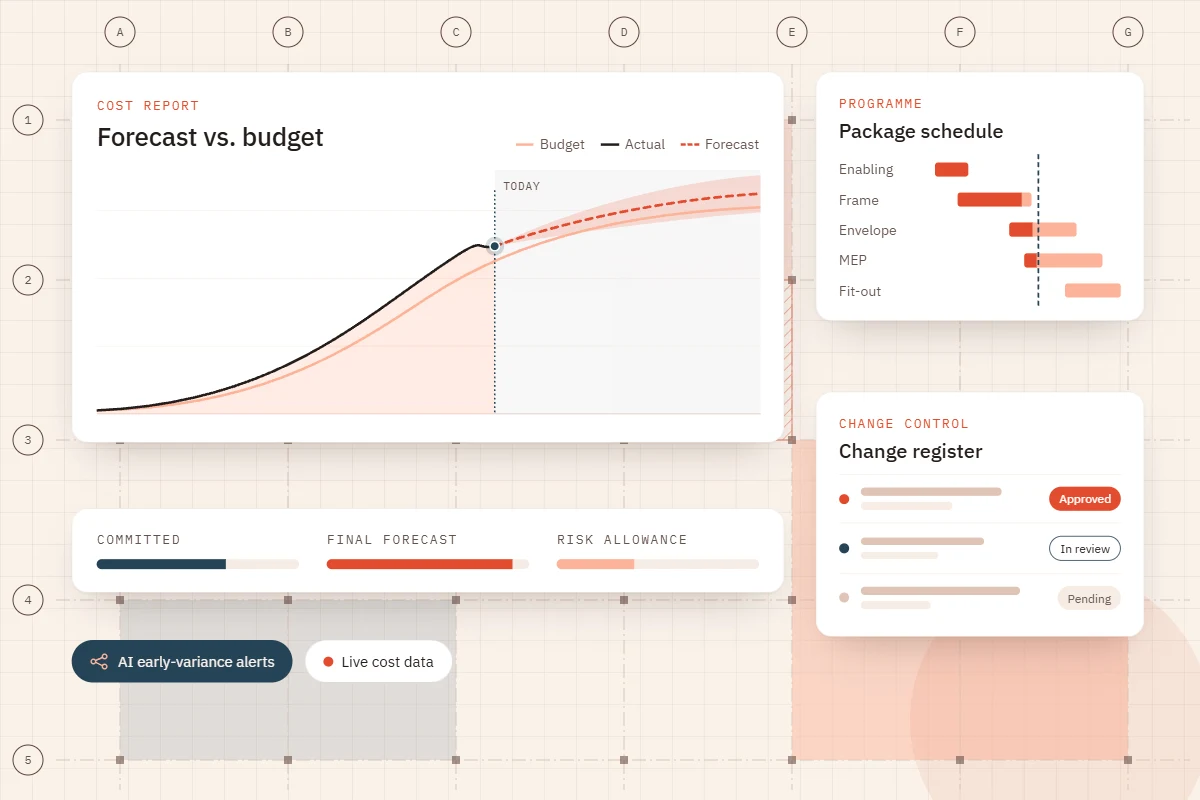
Platforms such as DHARAMetrics support this approach by bringing historical construction cost data into a structured environment for benchmarking, cost modeling and portfolio analysis.
This allows capital planning teams to evaluate early-stage options using more relevant historical comparisons and improve consistency across their project portfolios.
Explore DHARAMetrics construction intelligence
Looking ahead
As universities navigate financial uncertainty and growing infrastructure needs, capital planning will increasingly depend on the quality of the information available to decision-makers.
Institutions that combine condition assessments, reliable cost benchmarking and long-term investment planning will be better positioned to prioritize projects and manage capital expenditure.
The Dharam perspective
Effective capital planning starts well before design. By integrating feasibility studies, cost modeling, project prioritization and digital intelligence, universities can move from reactive investment decisions toward a more coordinated and financially sustainable capital strategy.